
Get to know
natural zeolite.
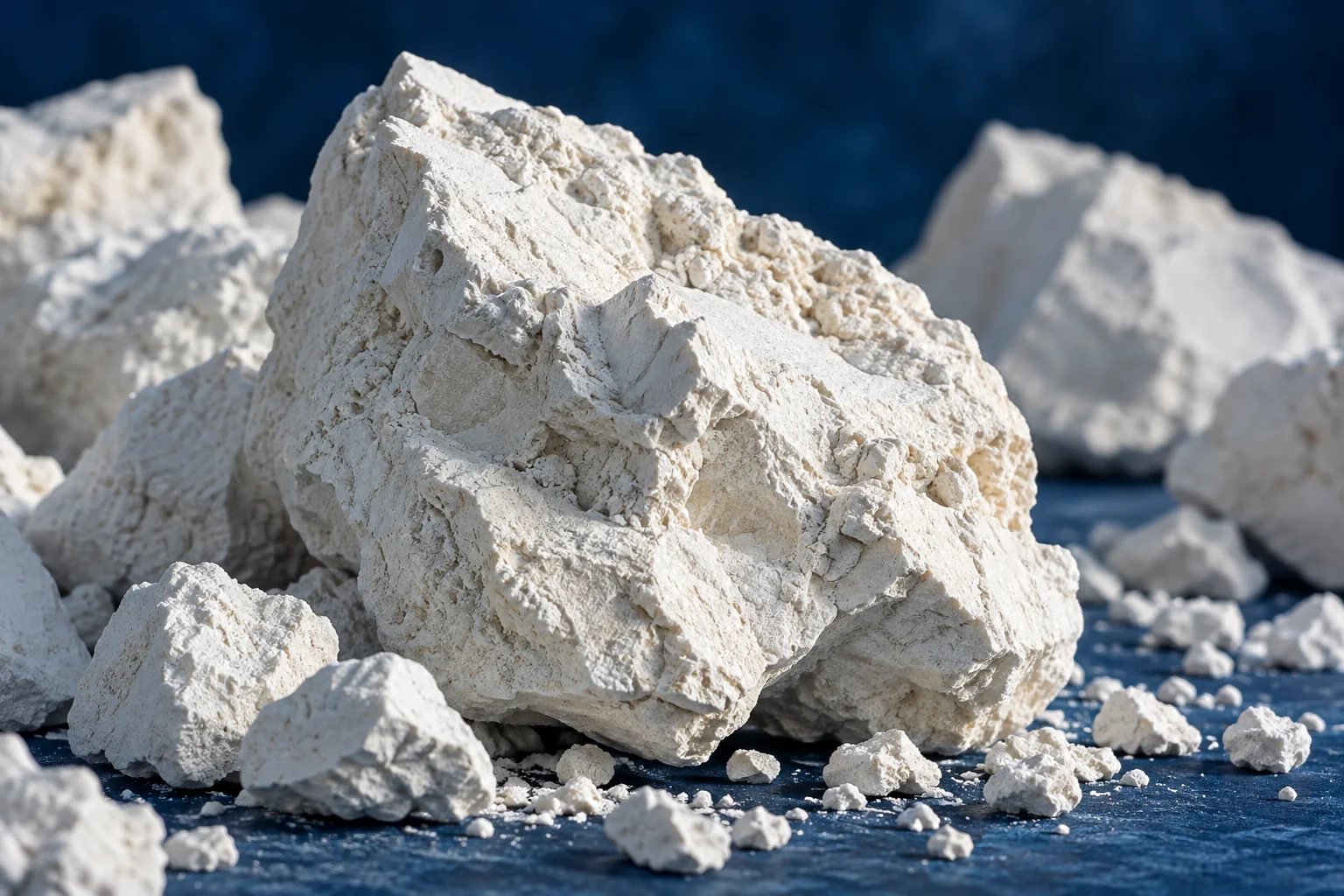
A natural mineral with a microporous structure. Let’s explore what that means before discussing its uses.
Inside
its structure.
Natural zeolites are aluminosilicate minerals. Their structure contains cavities and channels that interact with water and certain ions.
Pores & channels
The microscopic spaces inside the mineral explain the interest in its physical properties.
Water
The porous structure is associated with the adsorption and release of water. Its behaviour depends on the particular material and its environment.
Ion exchange
Certain cations can be exchanged with the surrounding environment. This property is studied in soil management.
An educational summary of general properties. Source: University of Arizona Cooperative Extension, 2020 — full PDF reference . This is not an analysis or technical specification of a ZEOKEL product.
Not all zeolites
are the same.
The mineral type, composition and material characteristics matter. The word ‘zeolite’ alone is not enough to choose a product.
What is clinoptilolite?
It is one of the natural types of zeolite. Its presence and proportion in a material must be established through appropriate analysis.
What should I know?
Ask for documented information about the specific material’s composition, origin and particle size, together with its instructions and restrictions for use.
How is a use selected?
Assessment connects the material’s characteristics with the soil, crop and intended application. General information does not replace advice from an agronomist.
From understanding
to application.
Explore the agricultural settings in which the use of natural minerals is considered.